

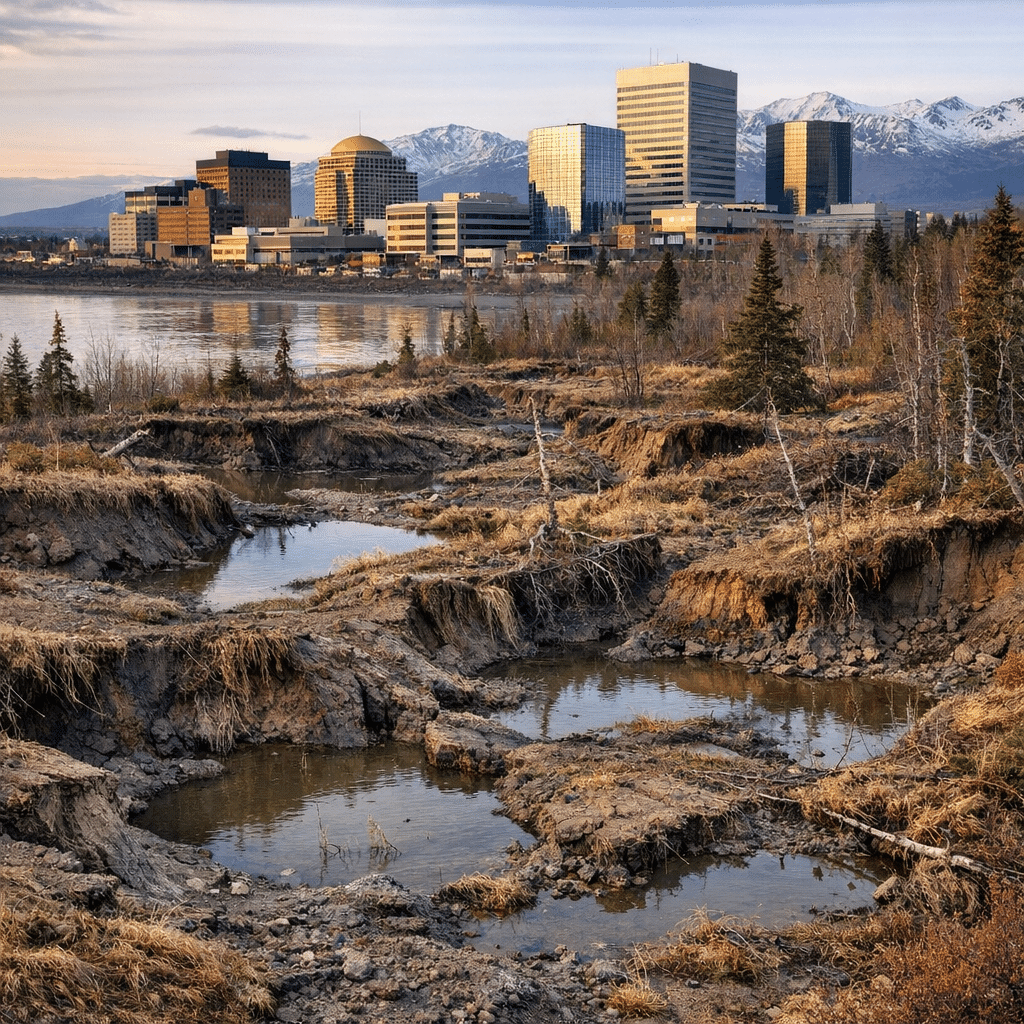
Anchorage, Alaska, is experiencing significant climatic shifts that are reshaping our environment and daily lives. Understanding these changes is crucial for our community’s resilience and adaptation.
Rising Temperatures and Shorter Winters
Since the 1970s, Anchorage’s average temperatures have risen approximately 4°F, with winter temperatures increasing even more dramatically. Notably, the 2019 heat wave saw Anchorage reach 90°F for the first time in recorded history. This warming trend has led to shorter winters; between 1970 and 2025, Anchorage’s winter season has shortened by 49 days, reflecting rapid warming in high-latitude areas.
Permafrost Thaw and Infrastructure Challenges
While Anchorage sits in a discontinuous permafrost zone, significant permafrost exists in shaded slopes and areas with organic soil cover. Thawing permafrost causes ground instability, damaging roads, building foundations, and utilities. The Alaska Department of Transportation estimates that permafrost-related damage costs the state $50–100 million annually in road repairs.
Increased Wildfire Risk
Alaska’s wildfire season has lengthened by 40 days since the 1980s, with the area burned annually doubling. Anchorage’s Hillside neighborhoods, adjacent to boreal forests with heavy fuel loads, face elevated fire risks. Drought conditions, increasingly common as summer temperatures rise, exacerbate this threat.
Community Response and Adaptation
In response to these challenges, the Municipality of Anchorage adopted a Climate Action Plan in 2019, aiming to reduce greenhouse gas emissions by 80% by 2050 from 2008 levels. The plan addresses various sectors, including buildings, transportation, health, and emergency preparedness, to enhance community resilience.
As Anchorage continues to experience these climatic changes, staying informed and proactive is essential for safeguarding our community and environment.