

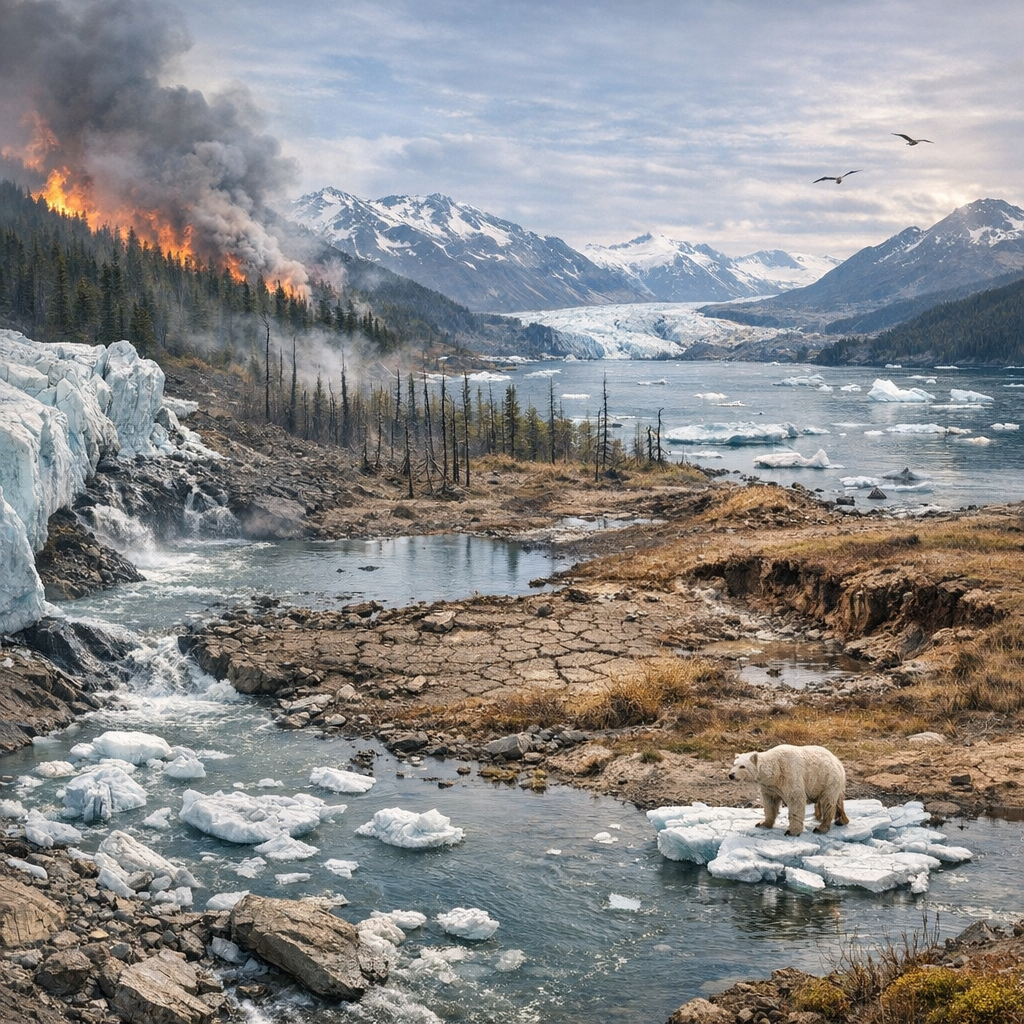
Alaska, known for its vast wilderness and resilient communities, is experiencing significant transformations influenced by global events. From climate change to international conflicts, these developments are reshaping the state’s environment and economy.
Climate Change Accelerates Environmental Shifts
The Arctic is warming over twice as fast as the global average, leading to shorter snow seasons, rapidly melting sea and glacier ice, and permafrost thaw. Sea ice reached its lowest winter coverage in satellite record history, while glacier retreat and mass loss continue, posing hazards like glacial floods and tsunamis. Record-high precipitation, fueled by a warmer atmosphere, is drastically impacting ecosystems through changes in river flows and snow distribution. Ocean warming has intensified storms, including ex-typhoons, and driven ecosystem shifts. Notably, marine and terrestrial ‘borealization’ is displacing native Arctic species. Further, thawing permafrost has turned rivers orange as iron and toxic metals pollute habitats and drinking water. Despite underfunded monitoring networks, Indigenous communities, such as those on St. Paul Island, are leading grassroots observation and resilience efforts. The report underscores the Arctic’s role in the broader global environmental crisis encompassing climate change, biodiversity loss, and pollution, highlighting urgent need for action. [Source: Space.com]
International Conflicts Impact Energy Supply Chains
Global geopolitical tensions, such as conflicts affecting the Strait of Hormuz, have indirect yet profound effects on Alaska. While the United States as a whole may not heavily rely on oil passing through this chokepoint, rural Alaskan communities do. Disruptions in global oil supply chains can lead to increased fuel prices and supply shortages, impacting daily life and economic stability in these regions. [Source: ArcticToday]
Increased Frequency of Extreme Weather Events
Alaska has witnessed a rise in extreme weather events, including powerful cyclones of tropical origin reaching higher latitudes. For instance, Ex-Typhoon Halong in October 2025 brought strong winds and devastating flooding to southwestern Alaska. Such events are becoming more frequent, posing challenges to infrastructure and community resilience. [Source: arXiv]
Community-Led Monitoring and Adaptation Efforts
In response to these challenges, Alaskan communities, particularly Indigenous groups, are leading grassroots monitoring and adaptation initiatives. These efforts aim to document environmental changes, preserve traditional knowledge, and develop strategies to mitigate the impacts of global events on local ecosystems and livelihoods. [Source: Space.com]
As global events continue to influence Alaska’s environment and economy, the state’s communities remain vigilant and proactive, striving to adapt and thrive amidst these changes.