
The Arctic is experiencing unprecedented warming, with temperatures rising at more than twice the global average. This rapid change profoundly affects Indigenous communities and has significant global implications.
Impact on Indigenous Communities
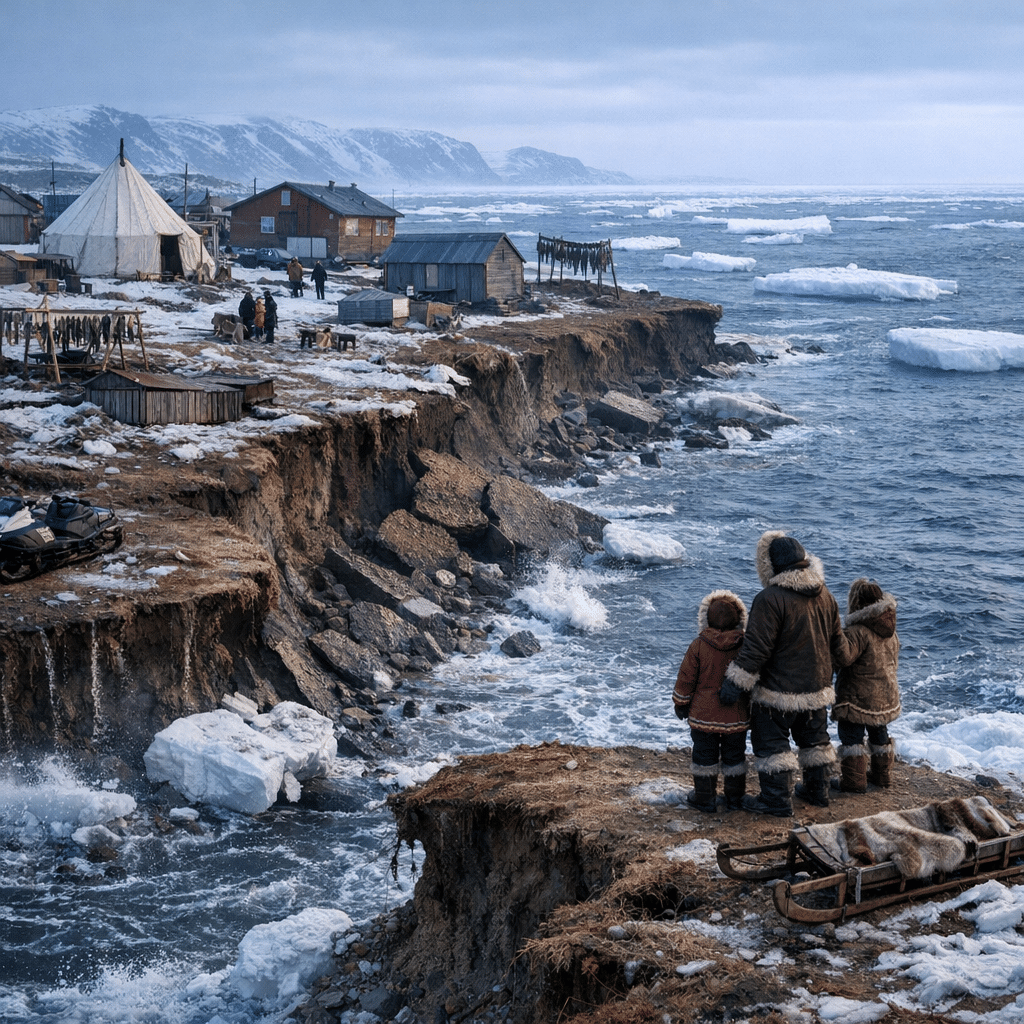
Indigenous peoples in the Arctic have long relied on stable environmental conditions for their traditional practices. However, the accelerating thaw of permafrost is destabilizing infrastructure, including homes and transportation routes. Coastal erosion, driven by diminishing sea ice and increased storm activity, threatens entire villages, necessitating costly relocations. Additionally, shifts in wildlife migration patterns disrupt subsistence hunting and fishing, jeopardizing food security and cultural traditions.
Global Consequences
The Arctic’s transformation extends beyond regional concerns. Thawing permafrost releases significant amounts of greenhouse gases, such as methane and carbon dioxide, into the atmosphere, exacerbating global warming. Melting Arctic ice contributes to rising sea levels, posing risks to coastal communities worldwide. Furthermore, changes in the Arctic can influence global weather patterns, potentially leading to more extreme weather events in other regions.
Call to Action
Addressing Arctic warming requires a concerted global effort to reduce greenhouse gas emissions and implement sustainable practices. Supporting Indigenous communities in adapting to these changes is crucial, as their traditional knowledge offers valuable insights into environmental stewardship. By taking decisive action, we can mitigate the impacts of Arctic warming and protect both local communities and the global environment.