

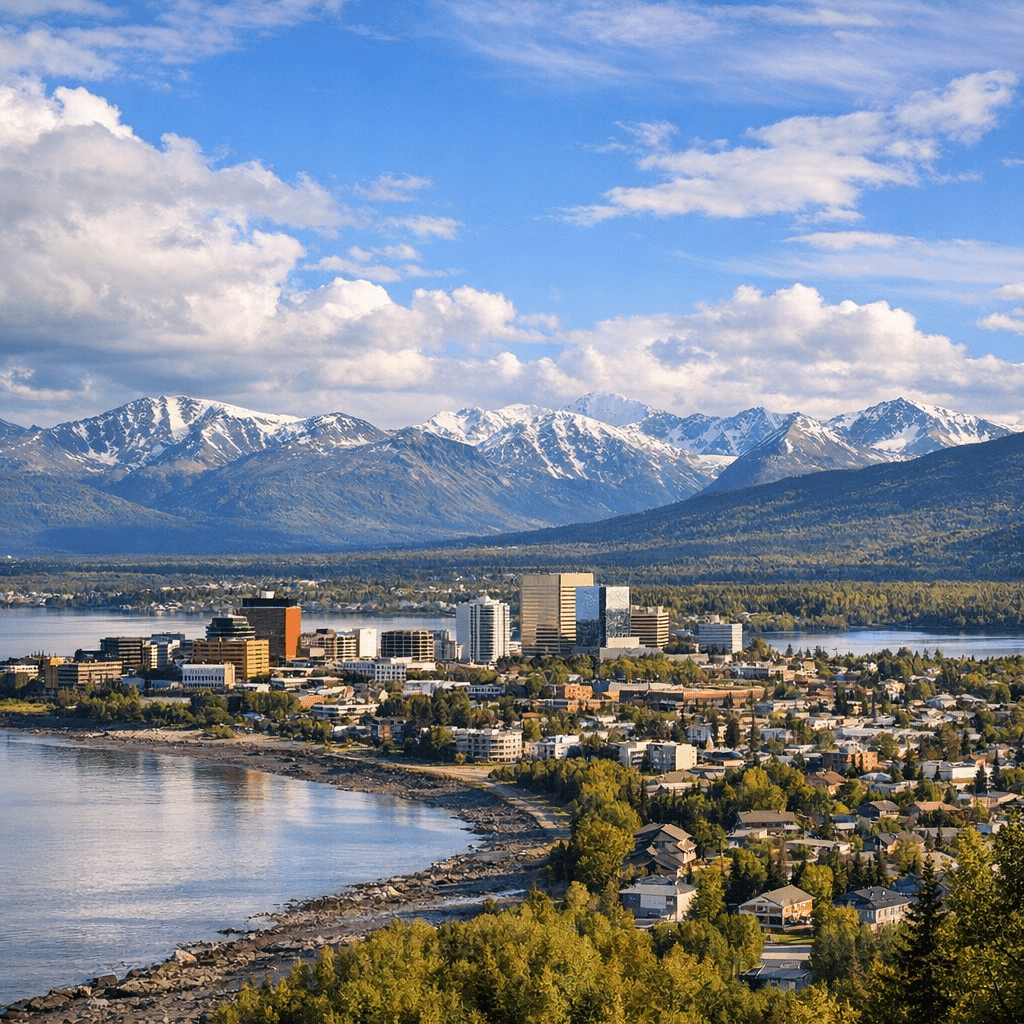
Anchorage, Alaska, is experiencing significant climatic shifts, with average temperatures rising approximately 4°F since the 1970s. This warming trend has led to notable environmental changes, including permafrost thaw, increased wildfire risk, and altered precipitation patterns. For instance, the 2019 heat wave saw Anchorage reach 90°F for the first time in recorded history. [Source]
Environmental Impacts
The thawing of permafrost is destabilizing infrastructure, while the retreat of glaciers and reduced sea ice are affecting local ecosystems. Additionally, the city has observed more rain during the shoulder months and increased snowfall during core winter months, leading to unpredictable weather patterns. [Source]
Community Initiatives
In response, Anchorage has undertaken several initiatives to address these challenges. The city is revamping its climate action plan to better prepare for and mitigate the effects of a warming climate. Efforts include enhancing air quality monitoring, with the Anchorage Health Department collaborating with local schools and the Alaska Department of Environmental Conservation to expand air monitoring networks, particularly in areas impacted by environmental justice issues. [Source]
Conservation projects are also underway. The establishment of the 300-acre Potter Marsh Watershed Park in December 2024 aims to protect vital habitats and provide public access to natural areas. This project was a collaborative effort involving the Great Land Trust, the Municipality of Anchorage, and other partners. [Source]
Looking Ahead
As Anchorage continues to experience the effects of climate change, ongoing community engagement and proactive measures are essential. By investing in sustainable practices and conservation efforts, the city aims to preserve its unique environment and ensure a resilient future for its residents.