

By Amelia Wilson — Anchorage continues to see shifts in housing that matter whether you’re renting, buying, or just keeping an eye on developments. From average rents creeping up to zoning reforms speeding construction, here’s a look at what’s happening across the real estate landscape.
Rental Market: Affordable Units in Short Supply
Rent in the city hovers between about $1,350 to $1,525 for the average apartment. Studios tend to run around $1,140–$1,200/month, one-bedrooms roughly $1,360–$1,370/month, and two-bedrooms move upward toward $1,670–$1,700 depending on size and location. These averages have nudged higher year-over-year—rentals are up by a few percent across most unit types. (Data reflects figures reported in late summer to early fall.)
Single-family rentals are significantly more expensive, often crossing $2,000/month for 2- to 4-bedroom homes, especially in South Anchorage, Abbott Loop, or neighborhoods with premium amenities. Vacancy rates remain tight, especially for more affordable units—making competition high.
Home Values & Buying Conditions
The typical home value in the Anchorage metro is now well over $400,000—recent estimates put it around $425,000–$430,000. That represents a clear rise compared to a year ago, though price growth is moderating. Buyers are seeing more listings and slightly longer days on market, though many homes are still selling close to their asking price.
Neighborhood variation is significant: while some areas like Northeast Anchorage or those farther from downtown present lower costs per square foot (or lower median listing prices), locations like Sand Lake and Rabbit Creek continue to see higher values. Condos and smaller homes often provide relatively more accessible entry points for first-time buyers.
Municipal Policies & Housing Development Momentum
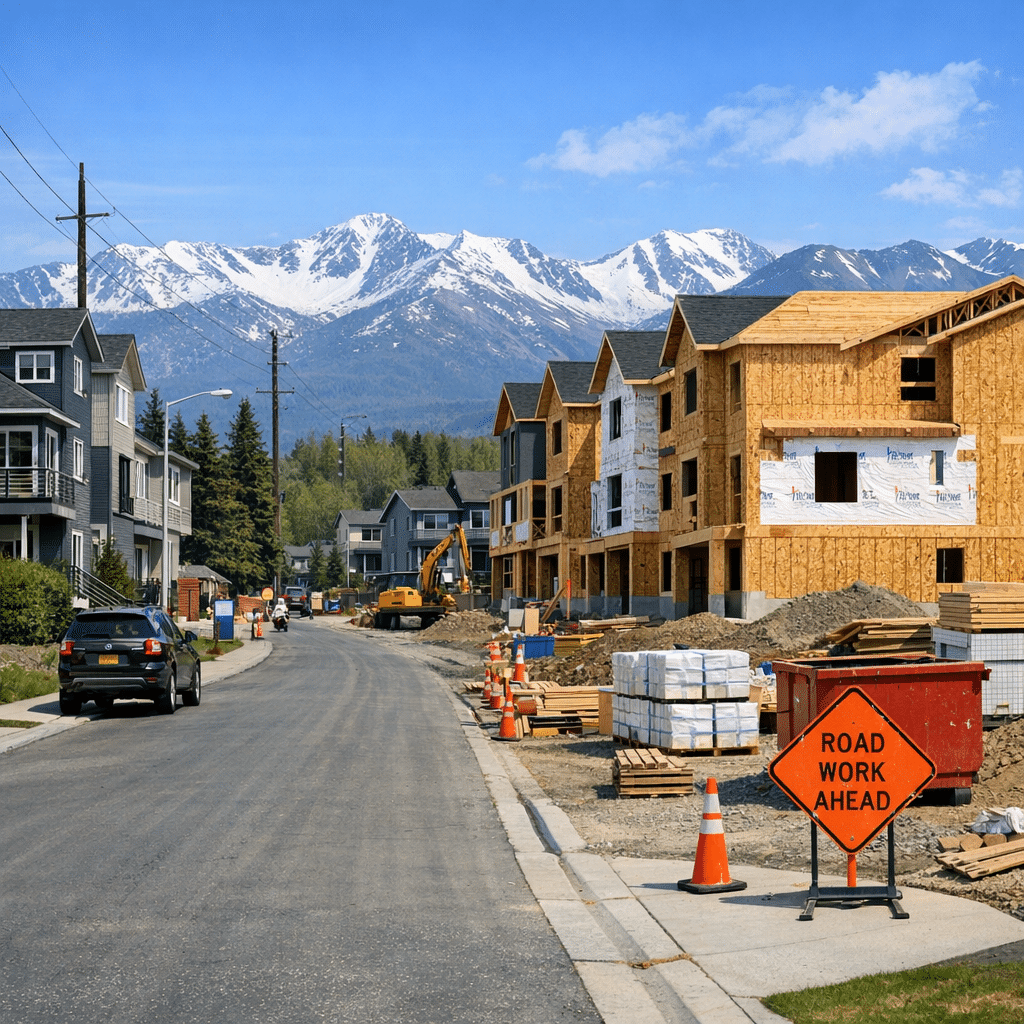
Anchorage’s “10,000 Homes in Ten Years” strategy under Mayor LaFrance is yielding measurable results. Residential permitting activity has picked up sharply — permit valuations are higher than last year and permit review times have been reduced. That is helping several development projects move forward.
One visible outcome: approval for a senior housing campus in Airport Heights via rezone reforms passed in 2025. Mixed-use and workforce housing projects, ADU initiatives, and neighborhood plans (e.g., Muldoon Road, Midtown, Fireweed Flats) are also under way. The Assembly has been reviewing updates to policies and building codes (including reduced parking minimums) to smooth the path for housing growth.
What This Means for Renters & Buyers
- If you’re renting, expect modest rent increases and tighter options, especially for lower-cost units. Signing early when a desirable lease becomes available can be a smart move.
- If you’re buying, it’s still a sellers’ market in many popular neighborhoods, but inventory is growing. Homes aren’t staying on the market as briefly as before—there’s slightly more breathing room for negotiations.
- Watch for new projects in neighborhoods you’re interested in. Letting zoning changes, municipal plans, and public-private partnerships guide your search could help you spot upcoming developments.
- Keep debt-to-income ratios, down payments, and mortgage costs in mind—rising interest rates and higher down payments remain important factors for affordability.
Looking Ahead
Anchorage’s housing market appears to be shifting toward a more balanced position—but many of the underlying pressures (high construction costs, supply chain or labor challenges, inflation) haven’t gone away. Policies aimed at generating both affordable units and diverse housing types will be key.
For community members, understanding what’s underway—and engaging with municipal planning and zoning efforts—offers a chance to influence the kinds of housing Anchorage becomes.