

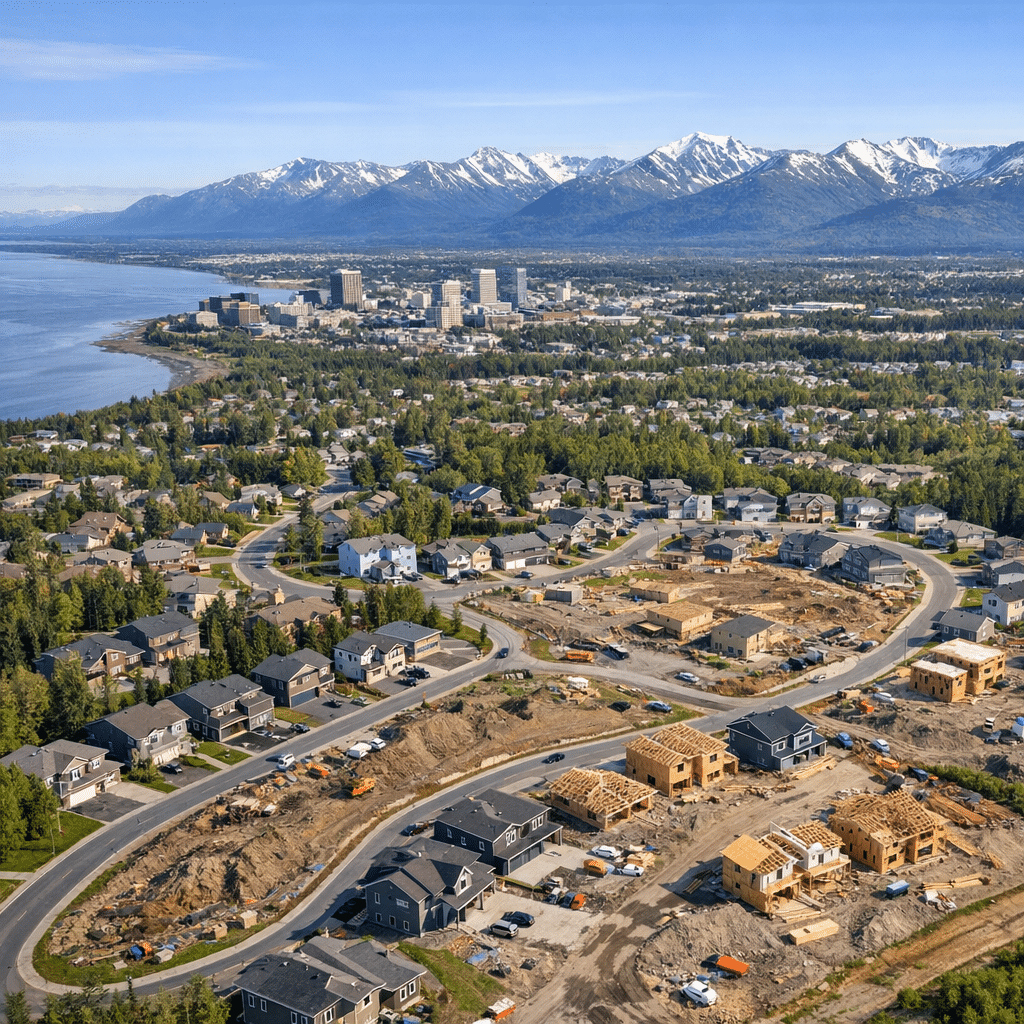
Anchorage’s housing market continues to exhibit steady growth, characterized by modest price appreciation and a competitive environment for buyers and renters alike.
Market Trends
As of early 2026, the median home value in Anchorage stands at approximately $410,782, reflecting a 3.8% increase over the past year. Homes are typically going under contract in about 8 days, indicating a brisk market pace. The median sale price is around $403,833, with a sale-to-list ratio of 1.000, suggesting that properties are selling at their listed prices. [Source: Zillow]
Inventory levels have seen a slight uptick, with active listings increasing by roughly 12% from early 2025. Despite this, the market remains competitive, especially in sought-after neighborhoods like South Anchorage, Hillside, and Eagle River, where well-priced homes often receive multiple offers during peak seasons. [Source: Alaska Home HQ]
Rental Market
The rental sector mirrors the competitive nature of the housing market. The average rent in Anchorage is approximately $1,692, marking a 3.7% year-over-year increase. This trend underscores the ongoing demand for rental properties, driven by factors such as limited housing inventory and a steady influx of residents. [Source: Zillow]
Local Developments
Several initiatives are underway to address housing needs and stimulate development. The Anchorage Community Development Authority (ACDA) is actively involved in projects aimed at enhancing the city’s housing landscape. Notably, the Fireweed Flats project seeks to develop multifamily workforce housing on Fireweed Lane, aiming to provide affordable living options for Anchorage’s workforce. [Source: ACDA]
Additionally, the Trailside Heights development in South Anchorage has successfully introduced 121 two- and three-bedroom units, offering affordable housing to over 300 residents. This project emphasizes community connectivity, featuring amenities like a community center and playground, and ensuring accessibility to nearby schools and public transit. [Source: Enterprise Engineering Inc]
Conclusion
Anchorage’s real estate market is characterized by steady growth and competitive dynamics. While inventory levels are gradually improving, demand continues to outpace supply, influencing both home prices and rental rates. Ongoing development projects spearheaded by organizations like the ACDA are crucial in addressing housing needs and fostering a vibrant community. Prospective buyers and renters should stay informed about market trends and upcoming developments to make well-informed decisions in this evolving landscape.