

Alaska’s unique geographical position and abundant natural resources have long positioned it as a pivotal player in global trade and energy markets. This role not only influences the state’s economy but also has broader implications for international relations and global supply chains.
Anchorage: A Global Logistics Hub
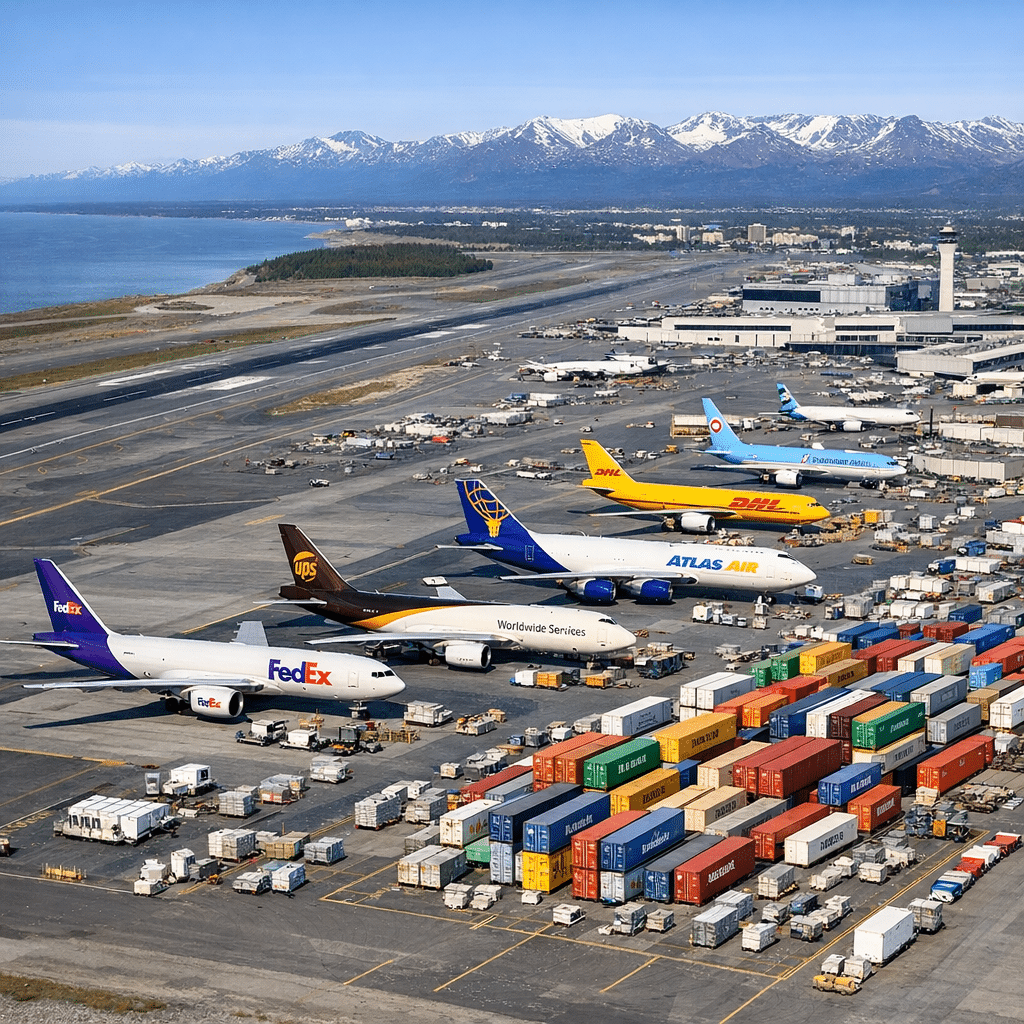
Anchorage’s Ted Stevens International Airport stands as a testament to Alaska’s strategic importance in global logistics. Situated within a 10-hour flight radius of 90% of the industrialized world, the airport ranks among the world’s busiest for cargo traffic. This central location facilitates efficient refueling and cargo transfers, making it a preferred stopover for international freight carriers. The airport’s capacity to handle large volumes of cargo underscores Alaska’s integral role in the global supply chain. [Source: YaleGlobal Online]
Energy Resources and International Markets
Alaska’s vast reserves of oil and natural gas have significant implications for global energy markets. The state’s energy sector not only supplies domestic needs but also caters to international demand, particularly from Asian markets. For instance, the proposed Alaska LNG project aims to transport natural gas from the North Slope to a liquefaction facility in Nikiski, targeting exports to countries like Japan and South Korea. Such initiatives highlight Alaska’s potential to influence global energy dynamics. [Source: Wikipedia]
Geopolitical Significance in the Arctic
Alaska’s proximity to the Arctic places it at the forefront of geopolitical developments in the region. As Arctic ice recedes, new maritime routes are emerging, potentially altering global shipping patterns. This shift has attracted the attention of major powers, including the United States, Russia, and China, each seeking to assert influence in the Arctic. Alaska’s strategic location makes it a key player in these evolving dynamics, necessitating careful navigation of international relations. [Source: Council on Foreign Relations]
Implications for Alaskan Communities
For residents of Anchorage and broader Alaska, these global roles translate into tangible economic opportunities and challenges. The state’s involvement in international trade and energy markets can lead to job creation, infrastructure development, and increased revenue. However, it also requires balancing economic growth with environmental stewardship and cultural preservation. Engaging with these global trends thoughtfully ensures that Alaskan communities benefit sustainably from the state’s strategic position.
In conclusion, Alaska’s unique position at the crossroads of global trade routes and its rich energy resources underscore its significance on the world stage. As international dynamics continue to evolve, Alaska’s role will remain crucial, influencing both local livelihoods and global economic patterns.