

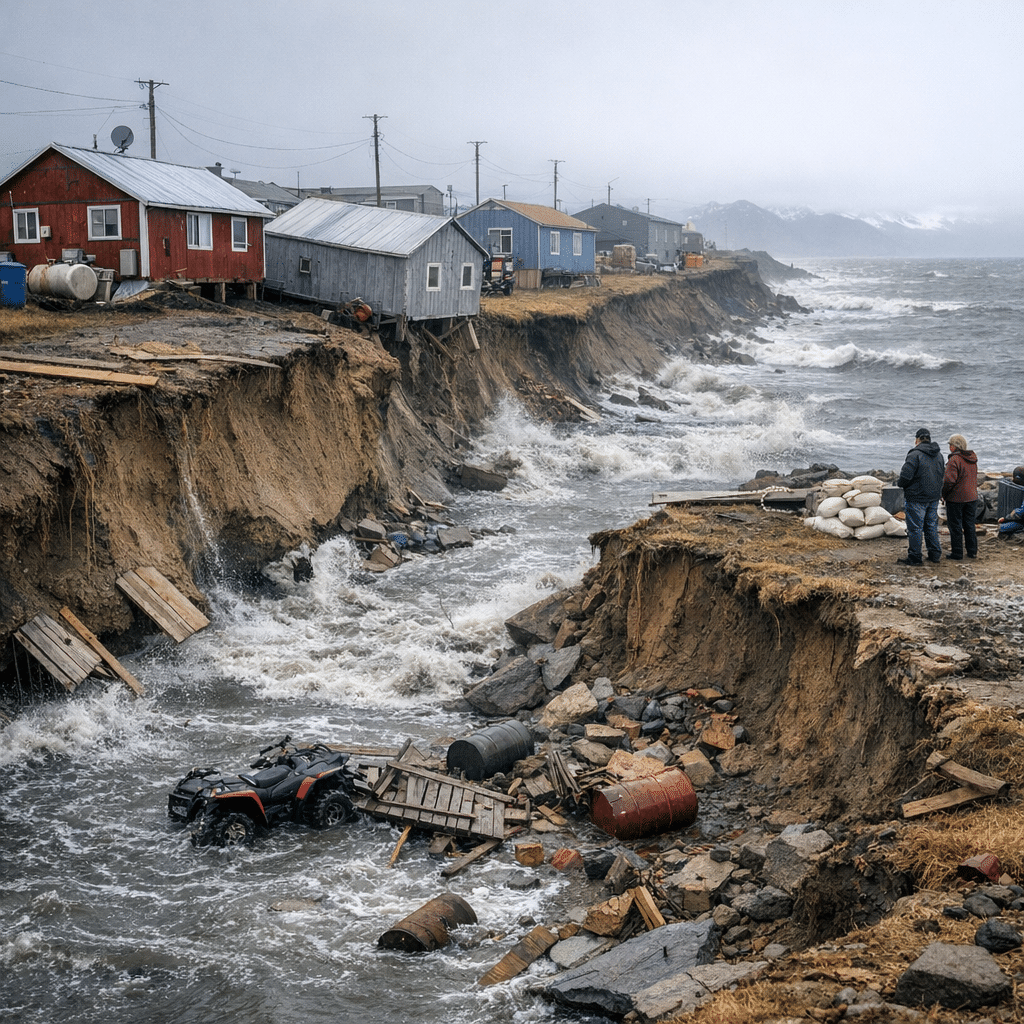
Alaska is experiencing climate change at an accelerated rate, with temperatures rising two to three times faster than the global average. This rapid warming has profound implications for our state’s environment, infrastructure, and communities.
Thawing Permafrost and Infrastructure Challenges
Permafrost, the frozen ground that underlies much of Alaska, is thawing due to rising temperatures. This thawing destabilizes the ground, leading to damage in roads, buildings, and pipelines. The Alaska Division of Geological & Geophysical Surveys notes that permafrost degradation can create hazards and impact water resources. Source
Coastal Erosion and Community Relocation
Reduced sea ice and rising sea levels have increased coastal erosion, threatening several Alaskan villages. Some communities are facing the difficult decision to relocate to safer areas. The U.S. Environmental Protection Agency highlights that coastal and riverine communities face relocation, migration, or protection in place due to these changes. Source
Wildfires and Ecosystem Changes
Warmer temperatures and drier conditions have led to more frequent and severe wildfires. Research indicates that Alaska’s North Slope is now experiencing its most frequent and severe wildfires in the past 3,000 years, driven by permafrost thaw and increasing dominance of woody shrubs—a process known as “shrubification.” Source
Impacts on Indigenous Communities
Indigenous communities, who rely on traditional hunting and fishing practices, are particularly affected. Changes in wildlife populations and habitats disrupt subsistence lifestyles, posing challenges to food security and cultural traditions. The U.S. Environmental Protection Agency notes that Native Alaskans are expected to experience declining availability of traditional foods and reduced access to sea ice hunting grounds. Source
Addressing these challenges requires a concerted effort from local, state, and federal entities, as well as the active participation of Alaskan communities. By understanding and mitigating the impacts of rapid warming, we can work towards a more resilient future for our state.