

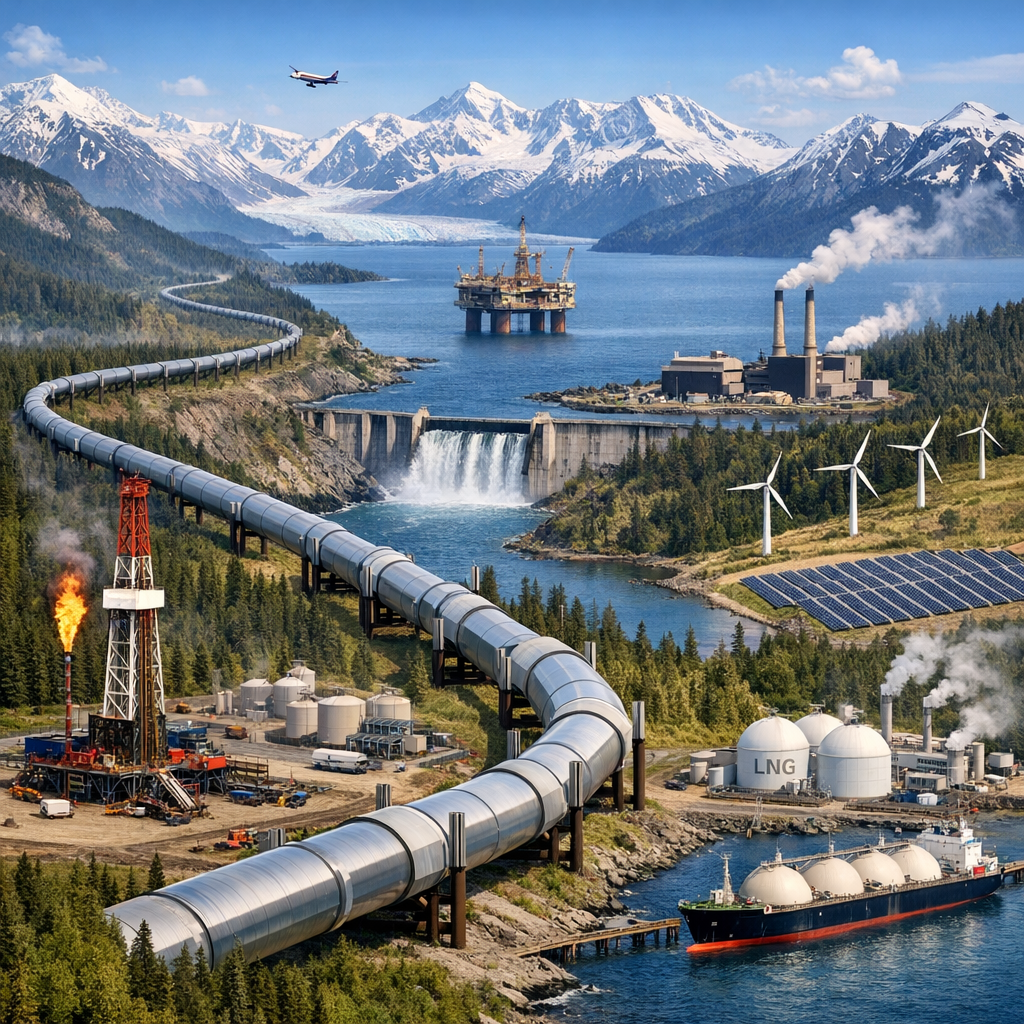
Alaska’s abundant natural resources and strategic location have long positioned it as a cornerstone of the United States’ energy landscape. The state’s vast reserves of oil, natural gas, and minerals not only fuel the national economy but also play a critical role in ensuring energy security.
Oil and Natural Gas Reserves
Alaska ranks among the top states in crude oil production, with significant reserves located in the Prudhoe Bay area of the North Slope and the Cook Inlet basins. The Trans-Alaska Pipeline System, capable of transporting up to 2.1 million barrels of crude oil per day, underscores the state’s capacity to contribute substantially to the nation’s energy needs. Additionally, the state holds considerable natural gas reserves, with the North Slope alone estimated to contain 85.4 trillion cubic feet of undiscovered, technically recoverable gas from natural gas hydrates.
Renewable Energy Potential
Beyond fossil fuels, Alaska’s diverse geography offers substantial renewable energy opportunities. The state’s numerous rivers provide high hydroelectric power potential, while its extensive coastline and volcanic areas present significant wind and geothermal energy possibilities. These resources position Alaska to lead in the transition toward a more sustainable energy future.
Strategic Initiatives and National Policy
Recognizing Alaska’s critical role, federal initiatives have aimed to unlock the state’s resource potential. Executive Order 14153, titled “Unleashing Alaska’s Extraordinary Resource Potential,” directs the expansion of natural resource development to bolster economic growth and national security. This policy underscores the strategic importance of Alaska’s energy assets in the broader context of U.S. energy policy.
Challenges and Environmental Considerations
While the development of Alaska’s energy resources offers significant benefits, it also presents challenges. The state’s harsh climate and remote locations pose logistical hurdles. Moreover, environmental concerns, particularly regarding the impact of resource extraction on fragile ecosystems, necessitate careful management and sustainable practices to balance development with conservation.
Conclusion
Alaska’s rich energy resources and strategic position make it indispensable to the United States’ energy security. Through responsible development and innovative policies, the state continues to play a pivotal role in shaping the nation’s energy future.