

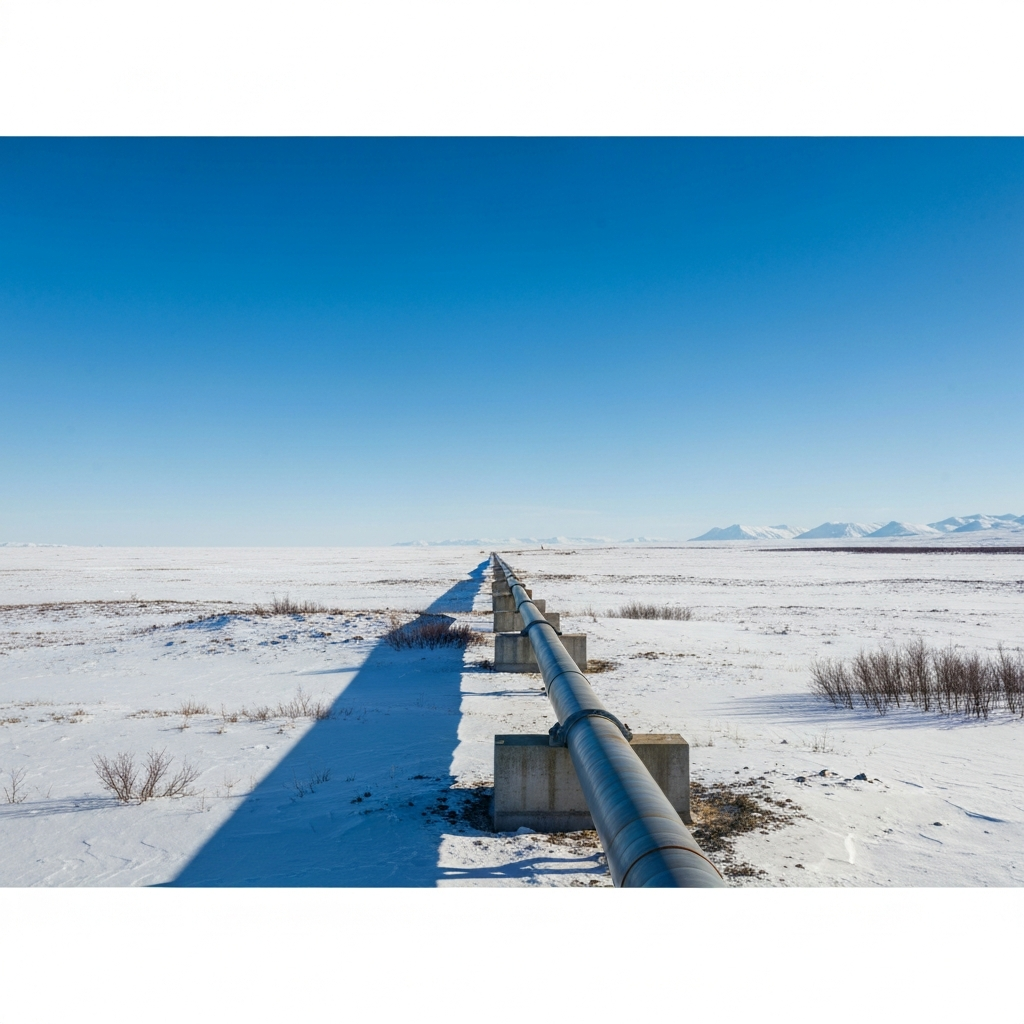
Alaska’s abundant natural resources and strategic location have long positioned it as a cornerstone of the United States’ energy landscape. The state’s vast reserves of oil, natural gas, and minerals not only fuel the national economy but also play a critical role in ensuring energy security.
Oil and Natural Gas Production
Alaska ranks among the top states in crude oil production, with the North Slope’s Prudhoe Bay being one of the largest oil fields in North America. In 2024, the state’s oil production averaged 421,000 barrels per day, placing it fifth among U.S. states. Additionally, Alaska’s natural gas gross withdrawals exceeded 3.5 trillion cubic feet, most of which are reinjected into oil fields to maintain production rates. These figures underscore Alaska’s substantial contribution to the nation’s energy supply.
Renewable Energy Initiatives
Beyond fossil fuels, Alaska is making strides in renewable energy. The state generated about 30% of its total electricity from renewable sources in 2024, with a non-binding goal to reach 50% by 2025. This transition not only diversifies the energy portfolio but also addresses the high energy costs faced by many rural communities.
National Security Implications
Alaska’s energy resources are integral to national security. The state’s strategic position in the Arctic and Pacific regions makes it a frontline for air and maritime defense. Reliable energy infrastructure is essential for military operations, and disruptions can have far-reaching consequences. Therefore, modernizing Alaska’s energy systems is not just a state concern but a national imperative.
Federal Support and Investment
Recognizing Alaska’s significance, the federal government has initiated policies to unlock the state’s resource potential. Executive Order 14153, titled “Unleashing Alaska’s Extraordinary Resource Potential,” aims to enhance economic and national security by promoting responsible resource development. This directive emphasizes the need to balance economic growth with environmental stewardship.
In conclusion, Alaska’s energy resources are vital to the United States’ economic stability and security. Continued investment and thoughtful policy decisions will ensure that the state remains a key player in the nation’s energy future.