

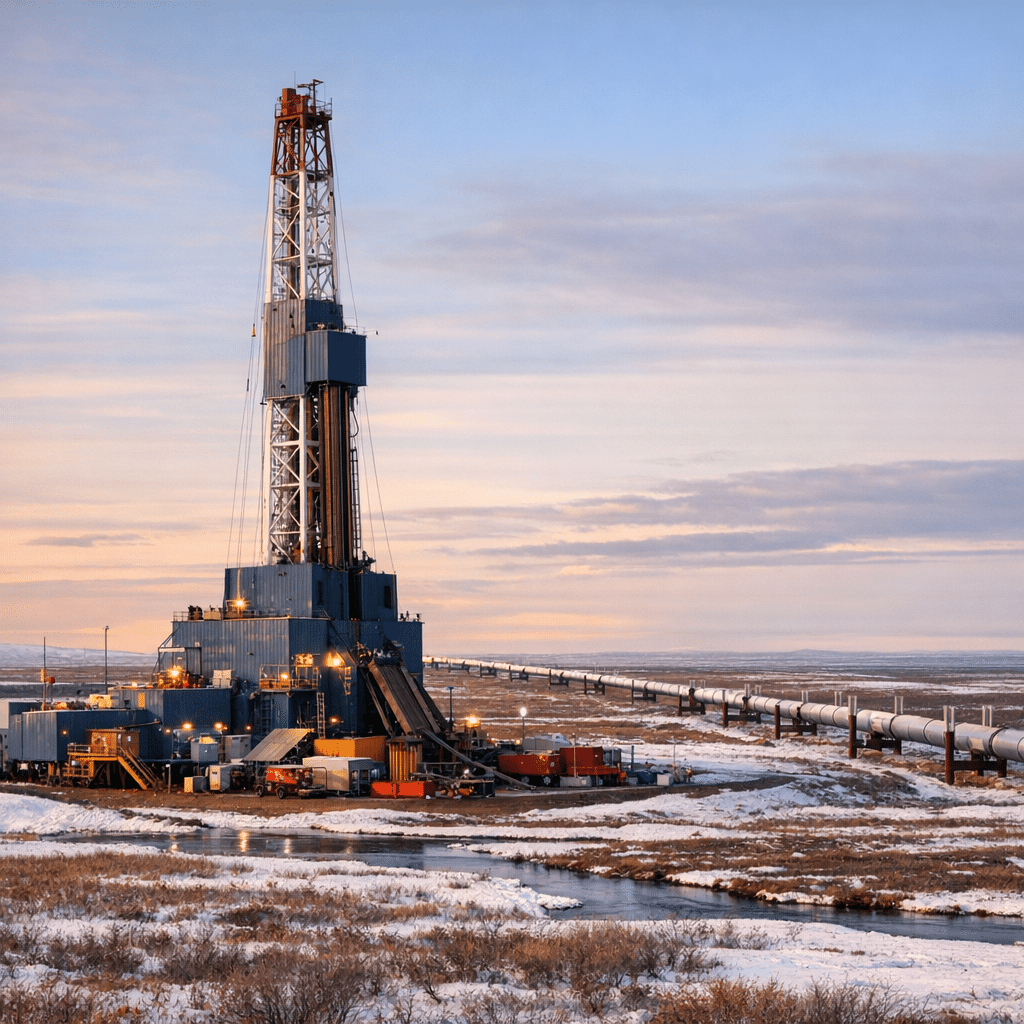
Alaska’s vast natural resources and strategic position play a crucial role in bolstering the United States’ energy independence and economic stability. The state’s abundant reserves of oil, natural gas, minerals, and seafood contribute significantly to the national economy and energy security.
Energy Resources
The North Slope of Alaska is home to some of the largest oil and gas fields in the country. The Trans-Alaska Pipeline System transports oil from these fields to the southern port of Valdez, facilitating distribution across the nation. Additionally, the Cook Inlet region has been a vital source of natural gas, supplying energy to Anchorage and surrounding communities. The Bureau of Ocean Energy Management estimates that the Alaska Outer Continental Shelf holds approximately 24.69 billion barrels of oil and 124.03 trillion cubic feet of natural gas, underscoring the state’s potential to meet future energy demands.
Mineral Wealth
Beyond hydrocarbons, Alaska is rich in minerals such as zinc, gold, and rare earth elements. These resources are essential for various industries, including technology and defense. Responsible development of these minerals can reduce the nation’s reliance on foreign imports and strengthen domestic supply chains.
Seafood Industry
Alaska’s waters yield a significant portion of the nation’s seafood. The Alaska Seafood Marketing Institute reports that the state’s seafood industry accounts for about 7% of Alaska’s GDP, providing employment and contributing to both local and national economies.
Strategic Importance
Alaska’s geographic location enhances its strategic importance for national defense. The state serves as a first line of missile defense and a base for rapid deployment of troops to various regions. This positioning is vital for maintaining national security and responding to global challenges.
Environmental Considerations
While developing these resources, it is imperative to consider environmental impacts. Alaska is experiencing rapid environmental changes, such as thawing permafrost and more frequent wildfires, which have significant implications for resource development and military operations. The Alaska Climate Adaptation Science Center provides scientific information and tools to better understand and forecast these environmental changes, supporting natural resource management and national security.
In conclusion, Alaska’s abundant resources and strategic location are integral to the United States’ energy independence and economic security. Responsible development, coupled with environmental stewardship, will ensure that Alaska continues to play a pivotal role in the nation’s future.