

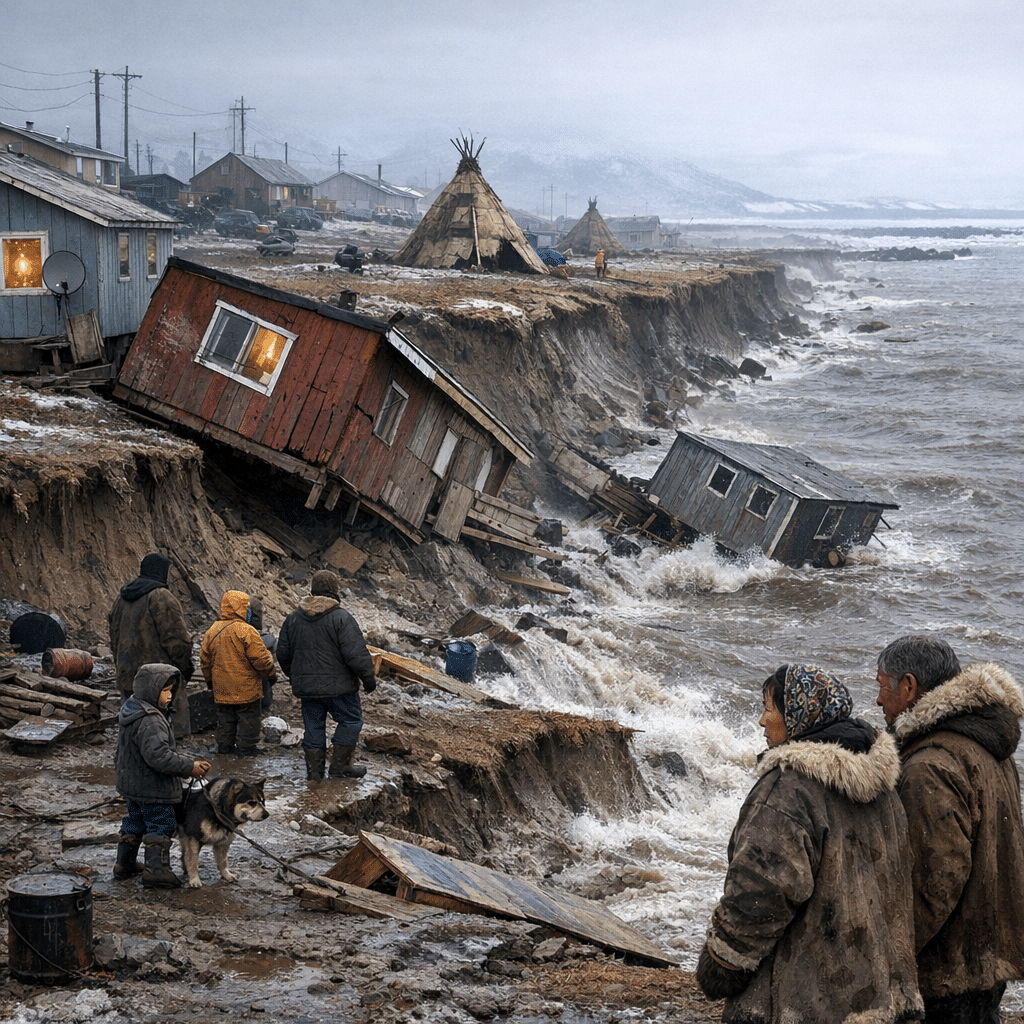
The Arctic is experiencing unprecedented warming, with temperatures rising at more than twice the global average. This rapid change profoundly affects Indigenous communities and has significant global implications.
Impact on Indigenous Communities
Indigenous peoples in the Arctic have long relied on stable environmental conditions for their traditional practices. However, the accelerating thaw of permafrost is destabilizing infrastructure, including homes and transportation routes. In Alaska, over 85% of Native villages are currently experiencing some level of flooding and erosion, posing immediate threats to their way of life.
Additionally, the loss of sea ice disrupts traditional hunting and fishing practices. Species like caribou and seals are altering their migration patterns, making subsistence activities more challenging. These environmental changes threaten food security and cultural traditions that have been passed down through generations.
Global Consequences
The Arctic’s transformation has far-reaching effects beyond its borders. Thawing permafrost releases significant amounts of greenhouse gases, including methane and carbon dioxide, into the atmosphere, exacerbating global warming.
Moreover, the melting of the Greenland Ice Sheet contributes to rising sea levels, posing risks to coastal communities worldwide. The Arctic’s warming also influences global weather patterns, potentially leading to more extreme weather events in various regions.
Conclusion
The rapid warming of the Arctic is not just a regional issue but a global concern. Addressing these challenges requires a concerted effort to reduce greenhouse gas emissions and support Indigenous communities in adapting to these unprecedented changes.