

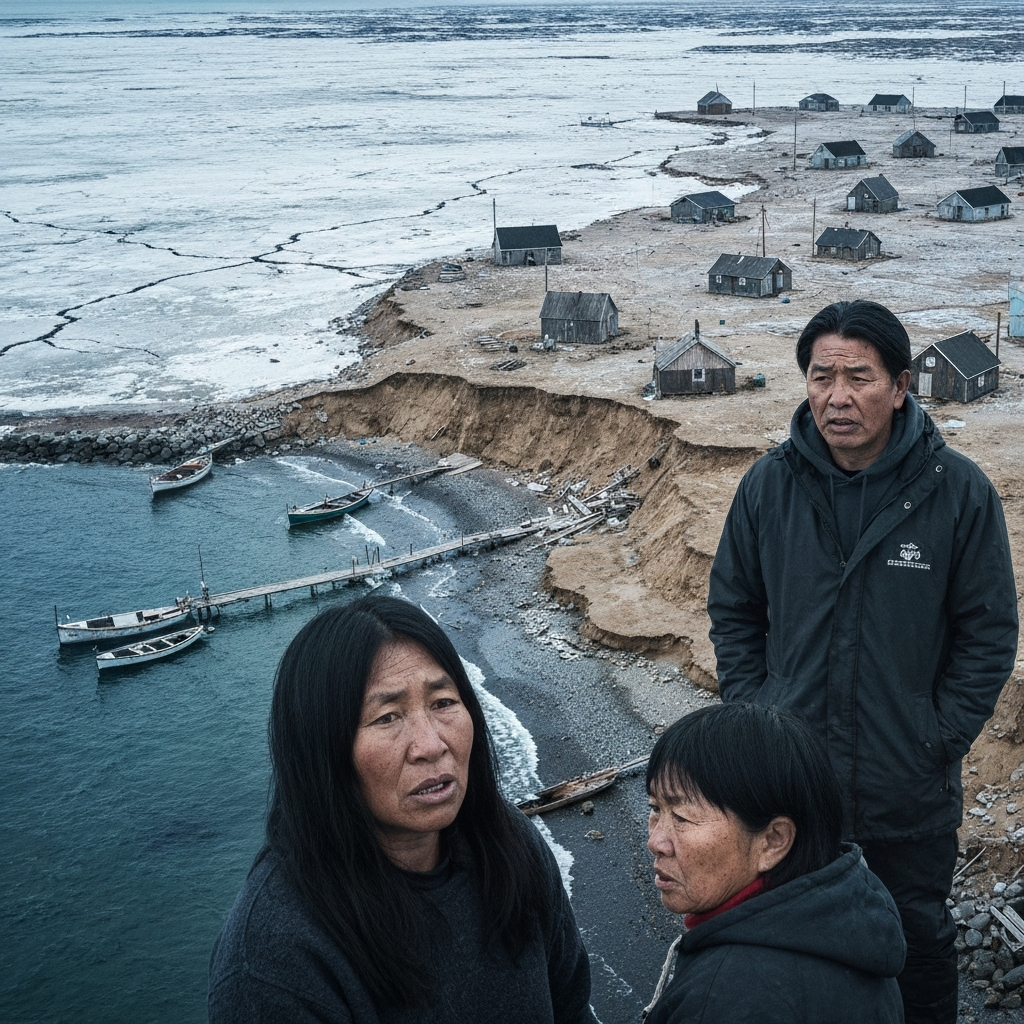
The Arctic is experiencing unprecedented warming, with temperatures rising nearly four times faster than the global average over the past four decades. This rapid change profoundly impacts Indigenous communities and ecosystems, particularly in regions like Alaska.
Effects on Indigenous Communities
For Indigenous peoples, the Arctic has been home for thousands of years. However, climate change is now a driving force behind environmental, economic, and societal transitions in the region. Sea ice, crucial for travel and hunting, is becoming increasingly unpredictable, threatening traditional ways of life. Changes in sea ice cover are affecting ice roads and shortening the period considered safe for travel. Arctic waters are also becoming void of ice for longer periods, extending the boating season and creating rougher seas. This, combined with rapid warming, is negatively affecting the lives and livelihoods of Arctic communities. Traditional ways of life, as well as species and ecosystems, may disappear forever if the world does not take swift and decisive measures to reduce greenhouse gas emissions and reverse the decline of biodiversity in the Arctic. Urgent action is required at all levels of government and society to keep warming to 1.5 degrees. Every fraction of a degree over this amount will lead us toward an Arctic we will no longer recognize and threaten the livelihoods, health, and cultural identities of Indigenous and local communities. Arctic states must recognize Indigenous Peoples as equal partners in stewarding the region and managing its resources. Using a combination of the best available scientific evidence and Indigenous Knowledge is the only way to ensure the Arctic can adapt to climate change and the growing pressures from industries. Greater investment and efforts are needed—and sadly, the pledges at COP27 just don’t go far enough.
Environmental Changes and Ecosystem Impacts
The warming Arctic is causing significant environmental transformations. Thawing permafrost poses risks to structures such as buildings, pipelines, and airstrips, potentially leading to instability. By 2050, up to half of Arctic infrastructure could face damage due to permafrost deterioration. Additionally, Arctic coastlines have some of the highest rates of erosion on Earth. The combined impacts of long-term warming (higher water temperatures, longer ice-free seasons, continuing permafrost thaw) and extreme events (such as storm-driven waves) are driving the increase. Up to five meters of coastline are disappearing every year in some areas of Alaska. With little or no sea ice to buffer shorelines, storm surges are extending their reach several kilometers inland, flooding communities, killing wetlands, and accelerating the thawing of permafrost. Along with damage to property, this is causing the irreversible loss of livelihoods and cultural heritage.
Adaptation and Resilience
Despite these challenges, Indigenous communities are leading grassroots observation and resilience efforts. The Arctic Report Card underscores the Arctic’s role in the broader global environmental crisis encompassing climate change, biodiversity loss, and pollution, highlighting the urgent need for action. Arctic states must recognize Indigenous Peoples as equal partners in stewarding the region and managing its resources. Using a combination of the best available scientific evidence and Indigenous Knowledge is the only way to ensure the Arctic can adapt to climate change and the growing pressures from industries. Greater investment and efforts are needed—and sadly, the pledges at COP27 just don’t go far enough.
Understanding and addressing the impacts of Arctic warming is crucial for the sustainability of Indigenous communities and the preservation of unique ecosystems. Collaborative efforts that integrate scientific research and traditional knowledge are essential in developing effective adaptation strategies.